

Firearm Technology Innovations in 2026: The Technologies Reshaping the Industry
The firearms industry is often portrayed as slow-moving and resistant to change. Yet 2026 is proving to be one of the most technologically significant years the sector has seen in decades. While the basic principles behind modern firearms remain largely unchanged, the technologies surrounding design, manufacturing, optics, materials science, and digital integration are advancing at a remarkable pace.
This year, innovation is being driven by several converging forces. Advances in smart manufacturing are making production more efficient. New materials are reducing weight while improving durability. Digital optics are becoming increasingly sophisticated. Modular platforms are giving consumers greater flexibility, and manufacturers are leveraging data-driven engineering methods that were once reserved for aerospace and automotive industries.
The result is an industry that looks very different from the one that existed just a few years ago.
The Rise of Computational Optics

One of the most talked-about developments in 2026 is the emergence of computational optics. For years, optics have primarily focused on improving glass quality, durability, and mechanical adjustments. Today, manufacturers are integrating sensors, onboard processing, and digital displays into their products.
Modern systems can combine environmental data, range information, and ballistic calculations into a single user interface. Instead of requiring separate devices and manual calculations, many of these systems process information automatically and present it through an integrated display.
This represents a significant shift in philosophy. Optics are no longer simply passive viewing tools; they are becoming intelligent information systems.
The broader trend mirrors developments seen in automobiles, aviation, and consumer electronics. Devices that once served a single purpose are increasingly becoming software-driven platforms capable of collecting, processing, and presenting information in real time.
While adoption remains concentrated among premium products, the pace of innovation suggests these technologies may eventually become commonplace throughout the market.
Thermal Imaging Reaches a New Level
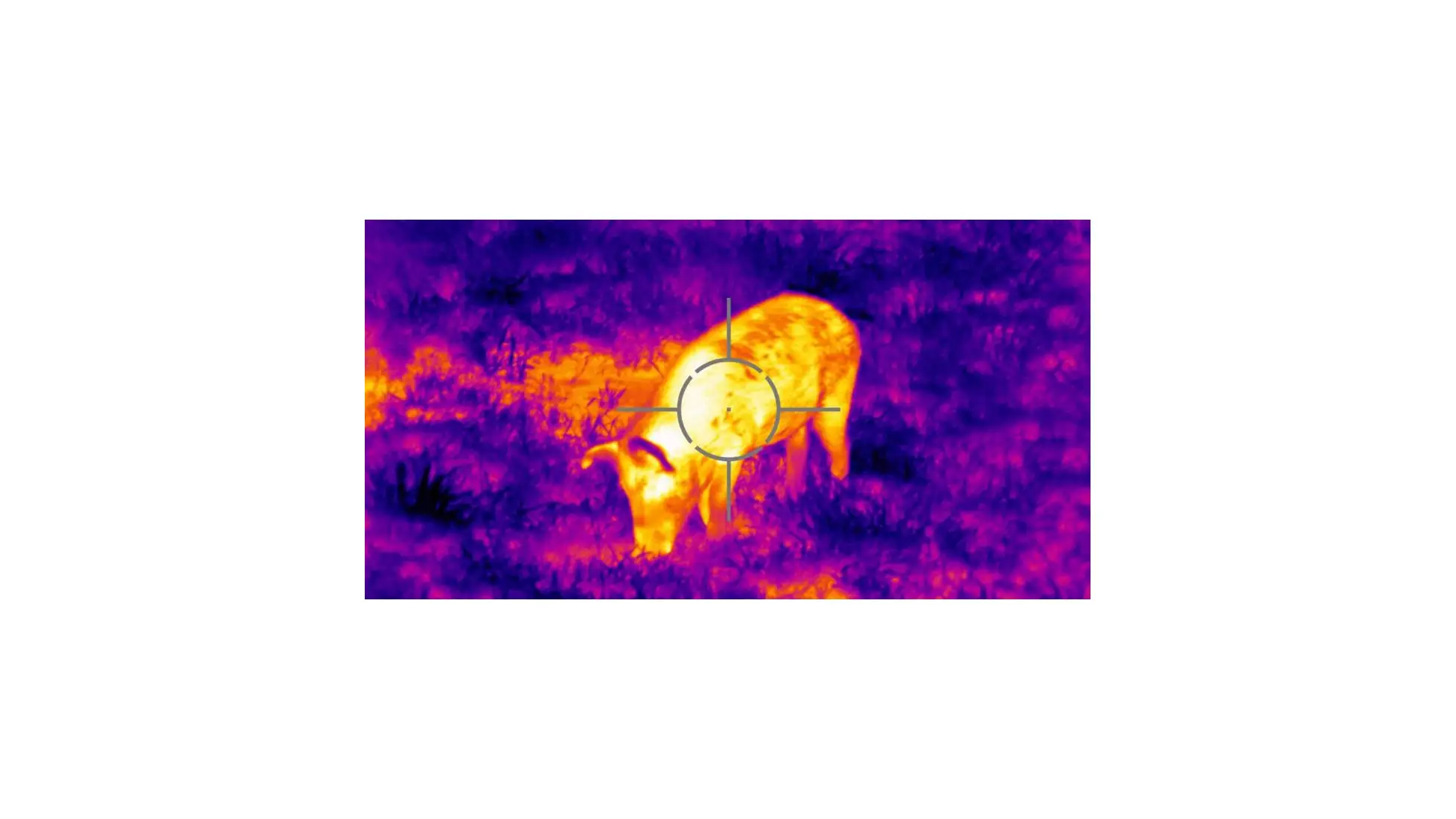 Another major trend in 2026 is the dramatic improvement in thermal imaging technology.
For years, thermal systems were limited by cost, image quality, and processing power. Advances in sensor technology are changing that equation. New generations of thermal devices are delivering significantly higher resolution, improved image processing, and more sophisticated integration with other electronic systems.
What makes this development particularly important is that thermal technology is benefiting from advances occurring across multiple industries simultaneously. Semiconductor manufacturing, artificial intelligence, image processing, and sensor miniaturization are all contributing to rapid improvements.
As a result, thermal systems that would have been considered premium or experimental just a few years ago are becoming more practical and accessible.
This pattern closely resembles the evolution of digital cameras. Early digital systems were expensive and limited. Continuous improvements in sensors and processing eventually transformed them into mainstream products. Thermal imaging appears to be following a similar path.
Smart Manufacturing Comes to the Forefront
While consumers often focus on finished products, some of the most important innovations are occurring behind factory walls.
Manufacturers are increasingly embracing smart manufacturing technologies that use automation, artificial intelligence, advanced sensors, and digital twins to optimize production.
The concept of a “digital twin” is particularly significant. Engineers can create highly detailed virtual models of products and production processes before physical manufacturing begins. This allows companies to identify potential problems, improve quality control, and reduce waste.
Artificial intelligence is also playing a larger role in manufacturing operations. Machine learning systems can monitor production equipment, predict maintenance requirements, identify quality issues, and optimize workflows.
These developments are part of a broader industrial transformation affecting sectors ranging from aerospace to automotive manufacturing. The firearms industry is increasingly benefiting from the same technologies that have improved efficiency across advanced manufacturing worldwide.
Perhaps most importantly, smart manufacturing enables companies to innovate more quickly. Designs can move from concept to prototype faster than ever before, allowing manufacturers to respond rapidly to market demand and technological opportunities.
Additive Manufacturing Moves Beyond Prototyping
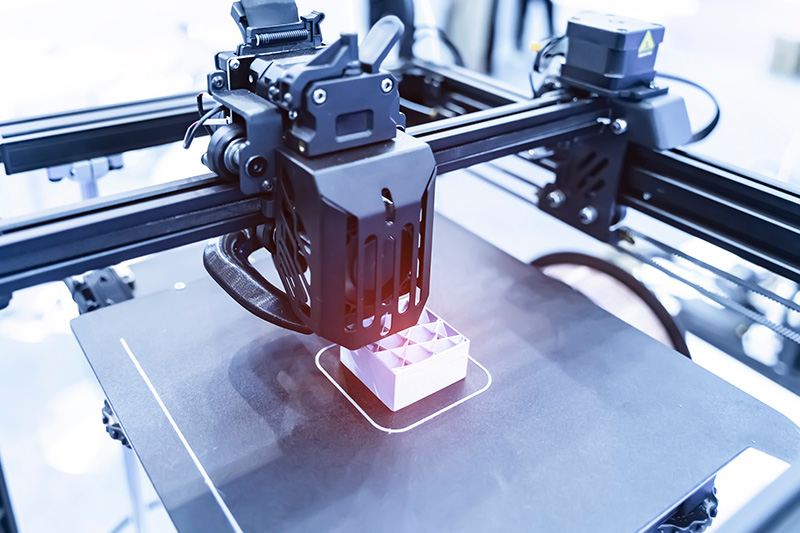
Three-dimensional printing has been discussed for years, but 2026 may mark the point at which additive manufacturing becomes a mature production technology rather than simply a prototyping tool.
Advanced metal-printing techniques are allowing manufacturers to create complex geometries that would be difficult or impossible to produce using traditional machining methods.
In many industries, additive manufacturing has already demonstrated its value for producing lightweight, highly optimized components. Firearms manufacturers are increasingly exploring similar opportunities.
One of the most significant advantages is design freedom. Engineers can create structures optimized for weight reduction, heat management, and material efficiency without being constrained by traditional manufacturing limitations.
As equipment costs decline and production expertise expands, additive manufacturing is likely to play an increasingly important role in future product development.
The Push Toward Modular Ecosystems
Modularity continues to be one of the defining themes of modern firearm design.
Consumers increasingly want products that can adapt to different needs without requiring entirely new purchases. Manufacturers are responding by developing platforms built around interchangeable components and configurable architectures.
The concept is similar to trends seen in consumer electronics and automotive design. Rather than creating a separate product for every potential use case, companies are building flexible systems capable of supporting multiple configurations.
From a business perspective, modularity offers significant advantages. It extends product lifecycles, encourages ecosystem development, and creates opportunities for future upgrades.
For consumers, it provides flexibility and personalization.
The trend suggests the industry is moving away from isolated products and toward broader platform-based strategies.
New Materials Change the Engineering Equation
Material science may be one of the least visible but most important drivers of innovation in 2026.
Engineers are exploring advanced composites, lightweight alloys, improved coatings, and hybrid material systems that offer new combinations of strength, durability, and weight reduction.
Particularly noteworthy are developments in advanced composite materials and high-performance manufacturing processes borrowed from aerospace applications.
Modern materials allow designers to achieve performance goals that would have been difficult with traditional steel-only approaches. Better heat management, reduced weight, improved corrosion resistance, and enhanced durability are becoming increasingly achievable.
As manufacturing costs decline, many of these technologies are expected to migrate from premium products into broader segments of the market.
The Data-Driven Future of Product Development
 Another major shift occurring in 2026 is the increasing use of data throughout the product development process.
Historically, product design often relied heavily on engineering intuition, testing cycles, and customer feedback. While those elements remain important, manufacturers now have access to far more sophisticated analytical tools.
Computer simulation, advanced modeling, digital testing environments, and machine-learning-assisted design are enabling engineers to evaluate countless design variations before producing physical prototypes.
This data-driven approach reduces development costs, shortens timelines, and improves confidence in design decisions.
The result is faster innovation cycles and more refined products reaching the market.
Looking Ahead
The biggest story of 2026 is not any single product release. It is the convergence of multiple technologies that are transforming the industry simultaneously.
Computational optics are introducing software-driven capabilities. Thermal imaging continues to improve rapidly. Smart manufacturing is reshaping production processes. Additive manufacturing is opening new design possibilities. Advanced materials are reducing weight while increasing durability. Data-driven engineering is accelerating innovation.
Taken together, these developments suggest that the future of the firearms industry will be defined as much by software, sensors, manufacturing technology, and material science as by traditional mechanical engineering.
For industry observers, 2026 may ultimately be remembered as a transition year—one in which the sector began moving decisively toward a more digital, data-driven, and technologically integrated future.