
If you’ve spent any time around hunting camps or gun counters, you’ve probably noticed that shotgun advice comes fast, confident, and often contradictory. One person swears by pumps, another won’t touch anything but a semi-auto, and someone’s uncle still insists a double-barrel is the only “real” shotgun. For a newcomer trying to buy their first gun, all that noise can make a simple purchase feel overwhelming.
The good news: buying your first shotgun doesn’t have to be complicated. Once you understand a handful of core concepts — gauge, action type, barrel length, choke, and fit — the decision narrows itself down fast. This guide walks through what actually matters, in the order it matters, so you can walk into a gun shop (or browse online listings) with confidence instead of guesswork.
Start With What You’re Hunting
Before anything else, figure out your primary use case. Shotguns are versatile, but no single gun does everything equally well, and buying based on your main purpose will save you money and frustration.
- Upland birds (quail, pheasant, grouse): Lighter guns you can carry and swing quickly all day.
- Waterfowl (ducks, geese): Heavier guns that handle recoil from larger loads, often with camo finishes and longer barrels for reach.
- Turkey: Guns optimized for tight, precise patterns at longer range, frequently paired with specialized turkey chokes and optics.
- Deer (with slugs, where legal): Guns with rifled barrels or cylinder bores paired with sabot or rifled slugs, sometimes fitted with a scope.
- Clay sports (skeet, trap, sporting clays): Guns built for repeated, comfortable shooting with an emphasis on fit and swing dynamics.
If you only plan to buy one gun and want flexibility, a 12-gauge pump or semi-auto with interchangeable chokes will cover the widest range of hunting situations. That’s the default many first-time buyers land on, and for good reason.
Choosing a Gauge
Gauge refers to the bore diameter of the barrel, and it’s usually the first fork in the road for new buyers.
12-gauge is the standard for a reason. Ammunition is everywhere, it’s affordable, and it handles everything from small upland birds to big geese depending on the load. If you’re not sure what you need, 12-gauge is the safe, practical choice.
20-gauge is lighter, has noticeably less recoil, and is a favorite for upland hunting and for younger or smaller-framed shooters. Modern 20-gauge loads have closed much of the performance gap with 12-gauge for lighter game, making it a very reasonable first gun, especially if recoil sensitivity is a concern.
16-gauge sits in between and has a loyal but smaller following. Ammo selection is more limited, so it’s not usually the best choice for a first-time buyer.
28-gauge and .410 are specialty options, better suited to experienced shooters looking for a lighter, more challenging gun rather than someone buying their first shotgun.
For most beginners, the choice comes down to 12-gauge versus 20-gauge. If recoil is a concern or you’re buying for a smaller-statured shooter, 20-gauge is excellent. If you want maximum versatility and the widest ammo selection, 12-gauge wins.
Understanding Action Types
The “action” is how the gun cycles from one shot to the next. Each type has real trade-offs.
Pump-action shotguns are reliable, simple, and generally the most affordable option. You manually cycle the action between shots by pumping the forend. They’re forgiving of cheap or dirty ammunition and are famously durable, which is why they remain a go-to recommendation for first-time buyers. The trade-off is a slightly slower follow-up shot and a learning curve to cycle smoothly under pressure.
Semi-automatic shotguns cycle automatically after each shot, using either gas or recoil energy. This means faster follow-up shots and typically softer felt recoil, since some of the energy goes into cycling the action rather than into your shoulder. They tend to cost more than comparable pumps and can be pickier about ammunition, though many modern designs have largely solved that reliability gap.
Break-action guns — single-barrel or double-barrel (side-by-side or over/under) — are simple, elegant, and popular for clay sports and upland hunting. They hold only one or two shots before reloading, which appeals to hunters who value simplicity and a traditional feel, but it’s a real limitation if you expect multiple birds in a flush or a following shot at waterfowl.
For a first shotgun, a pump-action is the classic, budget-friendly recommendation. If your budget allows and you want faster cycling with less felt recoil, a quality semi-auto is a strong step up.
Barrel Length and Choke
Barrel length affects handling and, to a smaller degree than most people assume, pattern performance.
- 26-inch barrels are quick-handling and popular for upland hunting where fast target acquisition matters.
- 28-inch barrels are the versatile middle ground, common on all-purpose guns.
- 30 to 32-inch barrels are typical for waterfowl and turkey guns, offering a longer sight plane for those slower, more deliberate shots.
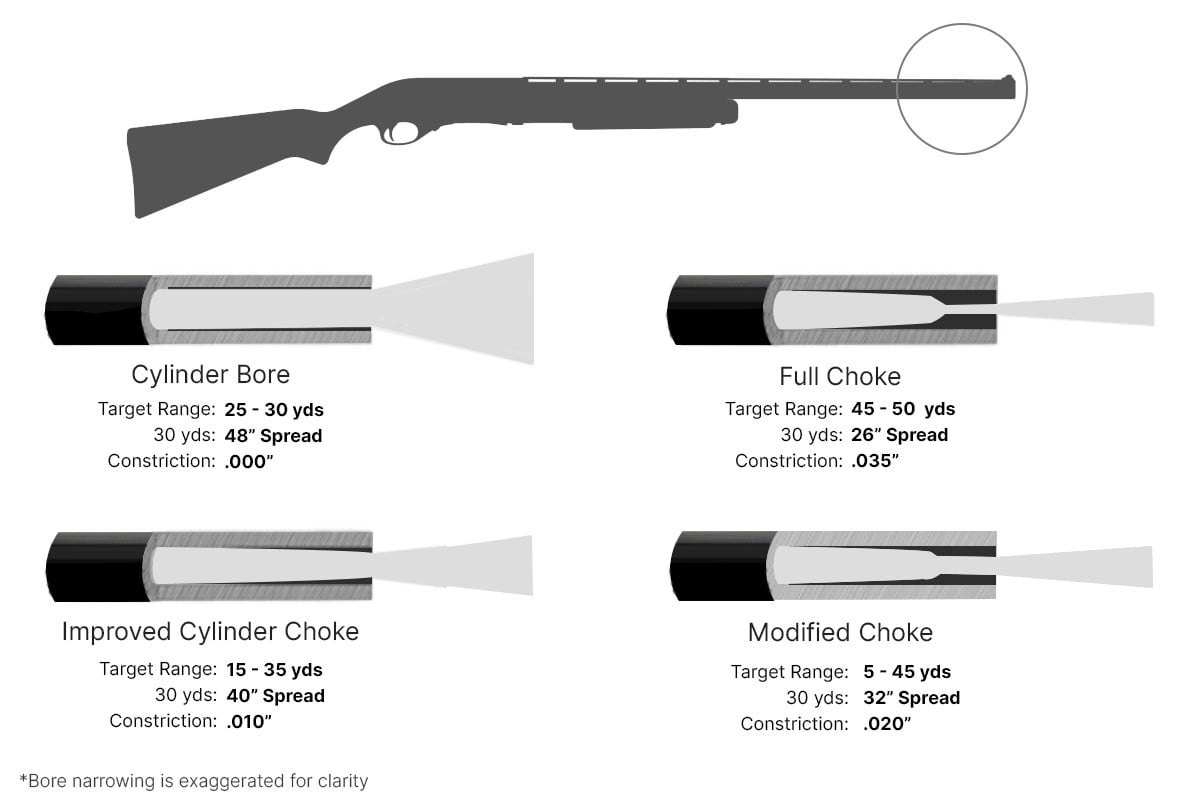
Choke refers to a constriction at the muzzle end that controls how tightly the shot pattern spreads. Most modern shotguns come with interchangeable choke tubes, which is a feature worth prioritizing on a first purchase. Interchangeable chokes let one gun adapt to close-range upland flushes, mid-range waterfowl work, and everything in between, rather than locking you into a single fixed pattern.
Fit Matters More Than Brand
New buyers often obsess over brand name and finish, but proper fit has a bigger impact on how well you actually shoot. A shotgun that fits poorly will feel like it’s fighting you every time you mount it, and no amount of practice fully overcomes bad fit.
Key fit factors include:
- Length of pull — the distance from the trigger to the butt of the stock. Too long, and the gun is slow and awkward to mount; too short, and your face sits too close to the receiver.
- Weight and balance — a gun that’s too heavy tires you out over a long day; one that’s too light can feel twitchy and hard to control.
- Comb height — affects where your eye lines up with the barrel when you mount the gun, which directly affects where you actually point versus where you think you’re pointing.
If at all possible, shoulder a shotgun before buying it. Many gun shops will let you mount a gun in-store, and some ranges rent shotguns so you can try before committing. A cheaper gun that fits you well will usually outperform an expensive gun that doesn’t.
New vs. Used
Buying used is one of the best ways to get more shotgun for your money, especially with pump-actions, which are famously durable. Look for:
- Smooth cycling with no excessive play in the action
- Clean bore with no visible pitting or rust
- Minimal wear at the muzzle and on the choke threads
- A price that reflects any cosmetic wear, since scratches and worn bluing are cosmetic, not functional, issues
New guns come with a warranty and no unknown history, which has real value for a first-time buyer who isn’t yet comfortable inspecting a used gun’s condition. If you’re buying used, consider bringing along someone experienced, or having a gunsmith give it a quick once-over before you commit.
A Simple Starting Recommendation
If you want a low-risk, high-versatility first shotgun, a 12-gauge pump-action with a 28-inch barrel and interchangeable chokes is hard to beat. It’s affordable, durable, forgiving of a beginner’s mistakes, and capable across upland, waterfowl, and clay-shooting situations. From there, as you discover what you actually enjoy hunting or shooting most, you’ll have a much clearer sense of what a second, more specialized gun should look like.
Final Thoughts
There’s no single “best” shotgun, only the best shotgun for what you’re doing and how it fits you. Nail down your primary use case, pick a gauge that matches your recoil tolerance and ammo availability, choose an action type that fits your budget and reliability needs, and above all, make sure the gun actually fits your body. Get those fundamentals right, and you’ll end up with a shotgun that serves you well for years, whether that’s your only gun or simply the first of many.
Before you buy, always check your local and state regulations regarding firearm purchases, required permits, and safe storage requirements, as these vary significantly by location.